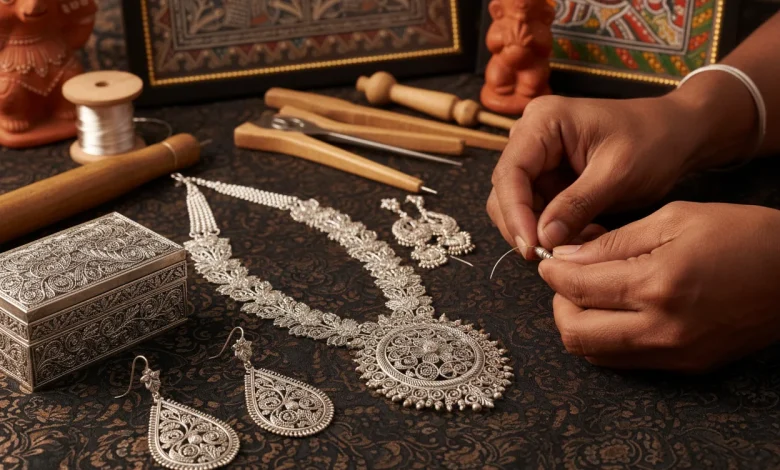
When you buy silver jewellery or decorative silverware, you are rarely paying only for the metal. The final price can also reflect purity, craftsmanship, design complexity, finishing and the time required to make the piece. This becomes particularly relevant when looking at traditional silverwork from Telangana.
The state has a long association with metal crafts, including intricate silver filigree work. Such pieces can cost noticeably more than their raw silver value because a large part of what you are buying is skilled workmanship. Understanding this difference is useful not only for buyers but also for investors who want to separate the value of silver as a commodity from the premium attached to a finished product.
Telangana’s connection with silver craftsmanship
One of the better-known silver crafts associated with Telangana is Karimnagar silver filigree. Filigree involves working fine strands of silver into detailed patterns. Instead of relying on a large solid surface, artisans twist, bend and arrange thin silver wires to create delicate designs.
The process requires precision because the individual components must be shaped and joined carefully. Filigree can be used for jewellery as well as decorative objects and ornamental pieces.
This is where the first part of the premium comes from. Two products may contain a similar amount of silver, but the one requiring more detailed manual work can have a much higher final price.
Why does Telangana silverwork carry a premium?
We will explore the answer to this question within the following factors:
1. Labour-intensive craftsmanship
Silver itself has a market price, but craftsmanship does not have a single daily quoted rate. A detailed handmade item may require several stages of preparation, shaping, joining and finishing.
The more complicated the design, the greater the amount of skilled labour involved. Buyers are therefore paying for both the precious metal and the artisan’s work.
2. Intricate designs take time
Fine patterns are one of the defining features of filigree work. Producing these details is different from manufacturing a simple silver bar or a plain ornament.
Say, for example, that you have two silver objects of equal weight and similar purity, but one has a basic machine-made design and the other is covered in handcrafted filigree patterns. They may have similar silver value, but the end selling price can be a lot different because there is more work involved in the second object.
3. Making charges affect the final price
The daily silver rate provides a useful reference for the value of the underlying metal, but it should not be treated as the final retail price of handcrafted silverware. The final price can be calculated by adding silver value, making charges, and applicable taxes and other charges.
Making charges compensate for the work involved in converting raw silver into a finished item. With detailed craftsmanship, these charges can form a meaningful part of the total bill.
Checking the current silver rates in Hyderabad and other cities can help buyers know the base metal value and the making charges.
4. Purity of the silver
Silver purity tells you how much actual silver is present in the alloy. When comparing two products, looking only at their weight can therefore be misleading. Purity, weight and making charges need to be considered together.
For buyers, checking hallmarking or other available purity information can make the price comparison more meaningful.
Conclusion
The traditional silver work of Telangana is a case in point to show that the price of a finished product in precious metal cannot always be judged by the silver rate alone. Intricate designs, skilled manual work, purity and finishing all contribute to the premium that buyers pay at the retail level.
For investors, however, the distinction between metal value and craftsmanship value is important. Silver prices determine the underlying commodity value, while the premium paid for artisan work will not be included when liquidating it.


